North Africa Regional News Briefing
1. Migration Pressures Intensify Along Mediterranean Routes
North African states are reporting renewed increases in migration flows toward Europe, prompting calls for expanded EU cooperation on border management, humanitarian support, and legal migration pathways. The trend reflects ongoing instability and economic hardship in parts of the wider region.
2. Economic Reforms Continue Amid Debt Challenges
Several governments in North Africa are pressing ahead with fiscal reforms aimed at stabilising public finances and securing international funding. Analysts say subsidy reforms and currency adjustments remain politically sensitive but crucial for long-term stability.
Deep Analysis: North Africa’s Economic Momentum, Political Tensions, and Strategic Role
Economic Outlook: Growth Driven by Reform and Geography
North Africa is entering 2026 with stronger economic momentum compared with many other parts of the continent.
Recent international assessments highlight that countries such as Egypt and Morocco are leading regional growth through infrastructure expansion, industrial policy, and deeper integration with global markets.
Analysts note the region’s unique advantage: its location between Europe, the Middle East, and sub-Saharan Africa positions it as a strategic connector for trade and investment, potentially boosting logistics, manufacturing, and energy exports.
Large-scale infrastructure is central to this strategy. Morocco, for example, is preparing to open a major Mediterranean deep-water port in 2026 as part of a broader plan to expand industrial capacity and energy exports, including green hydrogen. Source
Political Landscape: Stability with Underlying Pressures
Politically, the region remains relatively more stable than the Sahel, but it faces persistent governance and legitimacy challenges.
Observers describe a “paradox” in which economic progress coexists with political centralisation and limited reform in several countries, creating uncertainty for investors and civil society.
In Tunisia, for instance, economic gains from strong olive-oil exports are tempered by concerns over slow growth and an unpredictable business climate linked to political consolidation of power.
Meanwhile, diplomatic tensions remain visible in the Western Sahara dispute, with ongoing international engagement and negotiations shaping regional geopolitics.
Energy and Infrastructure: A Region in Transition
Energy remains a defining theme.
The broader Middle East and North Africa energy sector is entering 2026 with strong investment momentum, as governments seek to balance hydrocarbons with renewable energy and diversify revenue sources.
This shift is tied closely to industrial development strategies, with new ports, LNG infrastructure, and renewable projects aimed at strengthening export capacity and reducing reliance on imported fuels.
Migration and Humanitarian Concerns
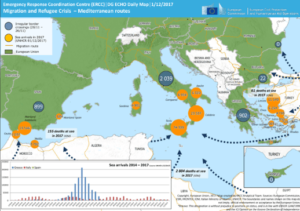 Migration continues to shape North Africa’s relationship with Europe.
Tragic incidents, such as migrant deaths along border routes, highlight the human cost of tighter border enforcement and the continued role of the region as a transit hub toward Europe.
Human-rights groups argue that stronger humanitarian coordination and safer migration pathways are needed to prevent further loss of life.
Soft Power and Global Visibility
North Africa is also leveraging sport and global events to enhance its international profile.
Morocco will host the FIFA U‑17 Women’s World Cup in late 2026, part of a broader strategy to position the country—and the region—as a hub for major sporting competitions and tourism.
Key Takeaways
-
Economic prospects are improving, driven by infrastructure, trade links, and policy reforms.
-
Political systems remain centralised, creating a mix of stability and long-term uncertainty.
-
Energy transition and logistics investment are reshaping development strategies.
-
Migration pressures and humanitarian risks remain significant.
-
Soft power initiatives, including global sporting events, are boosting international visibility Africa Diplomat Editor

Leave a reply
You must be logged in to post a comment.