
African Union Applauds Major Peace Deal in Ethiopia’s Amhara Region
No Case Matched!No Case Matched!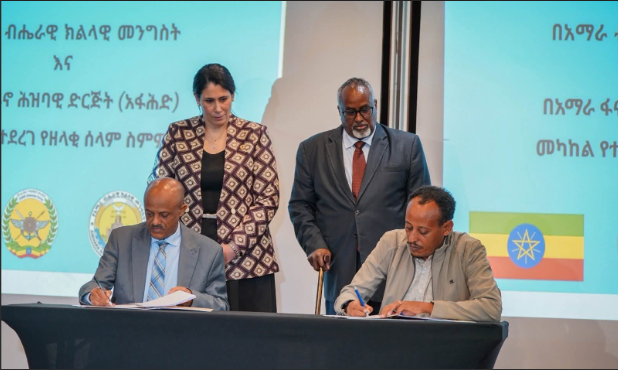
Addis Ababa, Ethiopia — In a significant development aimed at easing one of Ethiopia’s most persistent internal conflicts, the African Union (AU) has officially welcomed a newly signed peace agreement between the Amhara National Regional State and a faction of the Amhara Fano Popular Organization (FANO-AFPO). The signing, held in the Ethiopian capital on 4 December 2025, represents what AU leaders are calling a critical step forward in the country’s broader peace efforts.
The ceremony in Addis Ababa saw the presence of H.E. Selma Malika Haddadi, Deputy Chairperson of the African Union Commission, who delivered remarks affirming the AU’s support for local peace efforts. Also attending was Mr. Mohamed Abdi Ware, Deputy Executive Secretary of the Intergovernmental Authority on Development (IGAD), which has been involved in mediation efforts.

the African Union (AU) has officially welcomed a newly signed peace agreement between the Amhara National Regional State and a faction of the Amhara Fano Popular Organization (FANO-AFPO).
In her address, Deputy Chairperson Haddadi described the accord as a “landmark peace agreement” and emphasized its importance beyond Ethiopia’s borders. “Each peace agreement inches us closer to achieving our goal of Silencing the Guns in Africa,” she said, underscoring the AU’s continental peace objectives.
What the Deal Covers
According to statements released after the signing, the agreement sets out a framework for ending hostilities, promoting dialogue, and beginning a process of reconciliation and reconstruction in the Amhara region. It includes provisions for the release and reintegration of certain FANO members and initiatives aimed at restoring normal life for civilians affected by years of conflict.
Leaders from both sides at the event stressed that a lasting peace would require cooperation and genuine political commitment. Arega Kebede, Chief Administrator of the Amhara Regional State, noted that in conflict there are “no winners,” and reiterated that peace offers the best path toward shared prosperity and security.
On behalf of the FANO side, representatives expressed hope that the agreement would help reduce suffering in communities long affected by violence and displacement. They highlighted plans for rehabilitation programs and support for affected families, as well as the reintegration of fighters who renounce secessionist goals.
African Union’s Role and Broader Impact
 The AU’s endorsement of this deal signals a broader push by the continental bloc to facilitate African-led solutions to African conflicts, a core principle of its peace and security agenda. Officials say the agreement also aligns with ongoing efforts to strengthen political dialogue and stability across the Horn of Africa.
The AU has committed to supporting the implementation of the agreement, signaling potential involvement in follow-up monitoring and assistance. Such backing is seen as critical given Ethiopia’s history of localized insurgencies and broader regional instability.
Challenges and Reactions
While the peace deal has been widely reported as a breakthrough, some voices — including activists and opposition figures — have questioned aspects of the agreement’s legitimacy and representation, especially concerning who actually participated in the talks. Reports indicate that critics allege the deal reflects internal splits within FANO and does not fully represent all armed factions’ views.
Nonetheless, for many Ethiopians and regional observers, the accord — backed by the AU and IGAD — remains a hopeful sign that dialogue can gradually replace violent confrontation in one of the country’s most troubled regions.







Leave a reply
You must be logged in to post a comment.