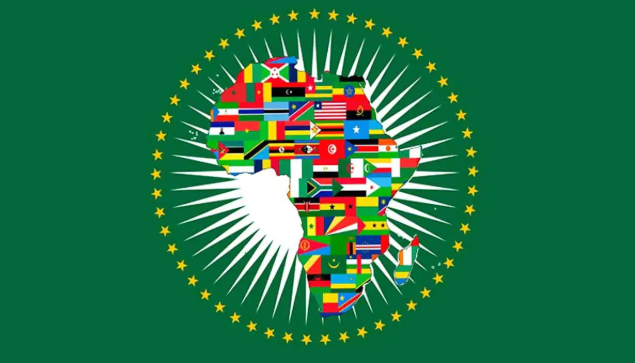
1. Strategic Context and Institutional Priorities
At the policy level, the African Union positions peace and security as foundational to continental development—an imperative underscored by the Chairperson of the African Union Commission, H.E. Mahmoud Ali Youssouf, in his transformative vision for Africa. The Chairperson reiterated that sustainable peace underpins the objectives of Agenda 2063, calling for robust conflict prevention mechanisms, early warning systems, operational readiness of the African Standby Force (ASF), and enhanced continental frameworks to address terrorism and unconstitutional seizures of power.
The AU continues to strengthen institutional coherence across its political, security, and governance mandates, aligning the Peace and Security Council (PSC), Pan-African Parliament (PAP), and other organs to integrate good governance, youth and women’s participation, and resource mobilization for peace initiatives.
In parallel, the AU champions predictable financial instruments through the AU Peace Fund. Convened at the AU Summit in February 2025, the Peace Fund High-Level Platform focused on “Sustainable Peace Financing,” drawing Heads of State, multilateral partners, and private sector stakeholders to expand innovative revenue streams and cement predictable support for conflict prevention, early warning, peace operations, and mediation.
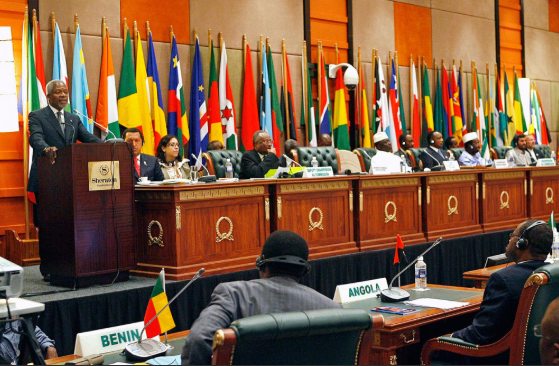
AU–UN strategic cooperation remains central, as reaffirmed at the Ninth AU–UN Annual Conference in New York. Both institutions underscored political solutions, preventive diplomacy, and mediation as primary conflict resolution tools, while committing to joint implementation of peace and development frameworks.
2. Peace and Security Council (PSC) Decisions — Regional Crises
SUDAN
The protracted conflict in Sudan remains the AU’s highest security priority in 2025. Across several PSC sessions, the AU has:
-
Explicitly condemned atrocities and violations of human rights in El Fasher, holding perpetrators accountable and demanding immediate cessation of hostilities and unhindered humanitarian access.
-
Insisted that there is no military solution to the Sudanese crisis, calling for an inclusive, AU-led political dialogue to restore peace and transition to civilian governance.
-
Strongly rejected the establishment of parallel governments or hostile political entities, highlighting the imperative to maintain Sudan’s sovereignty, territorial integrity, and democratic transition processes.
Each communiqué reiterates coordinated AU engagement with regional actors (e.g., IGAD) and international partners to galvanize mediation, protect civilians, and systematically address the severe humanitarian crisis.
SOUTH SUDAN
In March 2025, the PSC reaffirmed its commitment to South Sudan’s Revitalized Agreement on the Resolution of the Conflict (R-ARCSS) and outlined continued AU support for transitional milestones through to the scheduled end of the transitional period in 2027. This demonstrates the AU’s ongoing investment in post-agreement consolidation and political stabilization across long-standing conflict theatres.
GUINEA-BISSAU
In an Emergency Session in November 2025, the PSC reiterated the AU’s zero-tolerance policy toward unconstitutional changes of government, underpinned by the AU Constitutive Act. The Council reaffirmed established continental legal frameworks (e.g., the Lomé Declaration) and called for a return to constitutional order, democratic norms, and respect for the rule of law.
SOMALIA
In December 2025, the PSC reviewed the situation in Somalia and the mandate of the African Union Support and Stabilisation Mission in Somalia (AUSSOM). The Council:
-
Welcomed political progress toward inclusive dialogue and elections;
-
Recognized operational gains against Al-Shabaab while urging consolidation of security gains;
-
Highlighted ongoing financing gaps and the need for sustained resources, including through the AU Peace Fund and aligned UN Security Council mechanisms;
-
Renewed AUSSOM’s mandate for another 12 months.
MULTINATIONAL TASK FORCES (MNJTF)
The PSC reaffirmed continental support for the Multinational Joint Task Force (MNJTF) combating Boko Haram in the Lake Chad Basin and renewed its mandate for 12 months, signaling continuity in integrated regional counter-terrorism efforts under AU leadership.
3. Continental Peace Architecture — Strategic Tools and Policy Focus
Early Warning and Emerging Threats
The PSC has addressed non-traditional threats to peace and security, including technology-related governance risks. In March 2025, it adopted a communicqué on the impact of Artificial Intelligence (AI) on peace, security and governance, illustrating the AU’s recognition of digital risks and the need to integrate emerging technology into continental threat assessments.
Institutional Synergy and Oversight
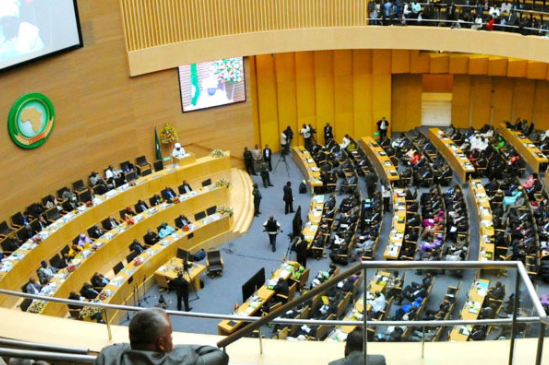
The PSC convened historic joint consultative meetings with the Pan-African Parliament, stressing that legislative oversight and democratic representation are fundamental to sustainable peace and security initiatives — especially in contexts where governance deficits fuel instability.
4. Strategic Implications and Forward Outlook
AU leadership in conflict resolution is now defined by complex, multi-layered engagements, including:
-
Sustained advocacy for inclusive political dialogue as the only viable path to durable peace in conflict zones such as Sudan and South Sudan;
-
The integration of peace financing mechanisms and private sector partnerships to underwrite continental responses;
-
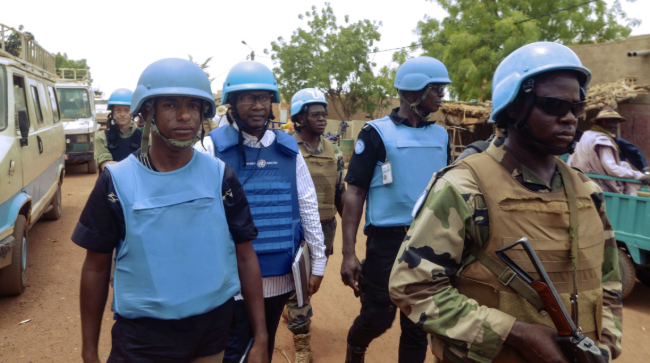
Strengthened AU–UN and AU-regional cooperation frameworks focused on preventive diplomacy, mediation capacity, and joint operational engagements;
-
Enhanced attention to emerging security challenges — such as AI, cybersecurity, and governance risks — that intersect with conventional conflict dynamics.
In summary, the AU remains at the forefront of African-led peace and security efforts through calibrated diplomacy, sustained institutional alignment, and innovative financing mechanisms. The PSC’s recent decisions reflect a commitment to upholding constitutionalism, protecting civilians, and reinforcing African solutions to African security challenges.

Leave a reply
You must be logged in to post a comment.