Central Africa Regional News Briefing
1. Regional Security Concerns Persist Amid Armed Group Activity
Parts of Central Africa continue to grapple with armed group violence, particularly in border regions where weak state control enables cross-border insurgent activity. Security cooperation between neighbouring countries has increased in response to the threat.
2. Humanitarian Needs Rise as Displacement Continues
Ongoing conflict and climate-related shocks are driving displacement across several Central African countries, stretching humanitarian resources and prompting renewed appeals for international assistance to support vulnerable communities.
Deep Analysis: Central Africa’s Political Continuity, Security Risks, and Climate Opportunity
Politics: Leadership Continuity Amid Fragile Institutions
The political landscape in Central Africa is defined by continuity but also lingering fragility.
In the Central African Republic, President Faustin-Archange Touadéra secured a third term after winning roughly 76–78% of the vote, despite opposition allegations of fraud and a boycott by major rivals.
The election followed a 2023 constitutional change removing presidential term limits, reinforcing executive power while raising concerns about democratic backsliding. Analysts warn that the country remains vulnerable given its history of conflict and reliance on foreign security partner
Security: Persistent Violence and Armed Group Activity
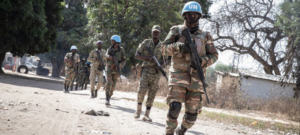 Security remains one of the region’s most pressing challenges.In eastern Democratic Republic of the Congo, the January 2026 Apakolu massacre left at least 25 civilians dead after an attack linked to the Allied Democratic Forces, a group affiliated with Islamic State.
The attack underscores a broader pattern of insurgent violence in the region, where multiple armed groups continue to target villages, displace civilians, and destabilise local economies.
Meanwhile, the long-running conflict in the Central African Republic—ongoing since 2012—continues to produce low-level fighting and periodic ceasefires, highlighting the region’s chronic instability
Climate and Environment: The Congo Basin as a Global Climate Asset
One of the most consequential developments in 2026 is the push to monetise the vast forests of the Congo Basin.
Countries in the region have launched strategic roadmaps to participate in global carbon markets, aiming to transform forest conservation into a major source of climate finance and green jobs.
These plans position Central Africa as a potential leader in nature-based climate solutions, though success will depend on governance reforms and transparent management of revenues.
Economy and Regional Integration: Mixed Signals
Economic prospects remain uneven.
The regional bloc CEMAC—which includes Cameroon, Gabon, and Chad—has faced financial strain, forcing the suspension of several integration projects due to funding shortages.
At the same time, private-sector expansion continues, with financial groups planning to enter new markets such as Gabon, signalling continued investor interest despite macroeconomic constraints.
Climate Risks and Disaster Preparedness
Central Africa is highly vulnerable to extreme weather, including floods and storms.
Regional organisations are now calling for stronger early-warning systems and climate-forecast coordination to protect lives and infrastructure, reflecting growing recognition of climate risks. Source
Key Takeaways
-
Political continuity is evident but often accompanied by governance concerns.
-
Security threats remain acute, particularly in eastern DR Congo and parts of the Central African Republic.
-
Climate finance opportunities linked to the Congo Basin could reshape the region’s economic future.
-
Regional integration faces financial constraints, even as private investment continues.
-
Climate vulnerability is pushing governments toward better early-warning systems.

Leave a reply
You must be logged in to post a comment.